
Lifelong learning isn’t a “nice-to-have” anymore—it’s a career requirement. As technology, business models, and customer expectations evolve, the professionals who stay employable and promotable are the ones who keep building relevant skills. The goal isn’t to learn everything; it’s to learn the right things consistently.
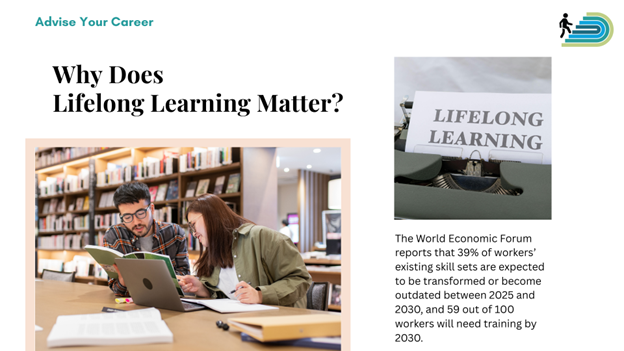
Why Lifelong Learning Matters
The workplace is changing faster than job titles
Employers expect skill requirements to shift significantly over the next several years. The World Economic Forum reports that 39% of workers’ existing skill sets are expected to be transformed or become outdated between 2025 and 2030, and 59 out of 100 workers will need training by 2030.
It strengthens job security and career resilience
When your skills stay current, you become more adaptable during reorganizations, market shifts, and automation-driven change. Upskilling also expands the roles you qualify for, which reduces risk if your current role changes.
It drives professional growth and opportunity
Learning improves your ability to solve problems, communicate clearly, lead initiatives, and contribute strategically—qualities that often separate strong performers from promotion-ready professionals.
It creates a competitive edge
In a crowded job market, the candidates who stand out can speak confidently about relevant skills, demonstrate recent learning, and show proof through results, projects, or certifications.
How to Identify the Right Skills to Learn
1) Track industry trends
Stay aware of what’s changing in your industry by following thought leaders, reading credible reports, and attending webinars or conferences. The World Economic Forum identifies both technical skills (like AI, data, cybersecurity, and technology literacy) and human skills (like creative thinking and resilience) as growing in importance.
2) Use job postings as a real-time roadmap
Search roles you want now or in the next 12–24 months and look for patterns:
- Repeated skills and tools
- Required vs. preferred qualifications
- Certifications that appear frequently
- Leadership or cross-functional expectations
3) Ask leaders and mentors
A quick conversation can save you months of guessing. Ask:
- “What skills will matter most on this team in the next year?”
- “What capabilities separate top performers from average performers here?”
- “If you were in my position, what would you learn next?”
4) Conduct a skills audit
List your current skills in three buckets:
- Hard skills (tools, systems, technical skills)
- Soft skills (communication, leadership, adaptability)
- Role/industry skills (compliance, project management, stakeholder management)
Then identify the gaps between your current skills and the roles you want.
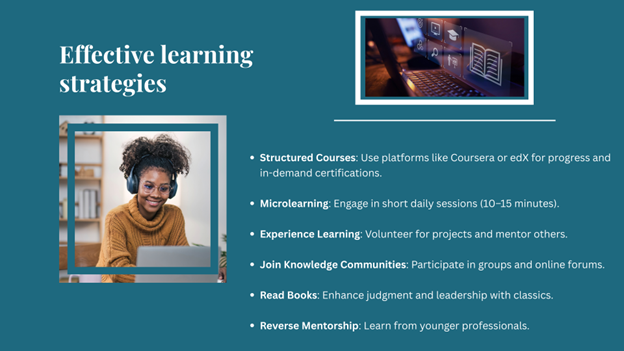
Effective Strategies for Lifelong Learning
Take structured courses or certifications
If you want a clear path and measurable progress, use online courses or certification programs (platforms like Coursera, edX, Udemy, and LinkedIn Learning are common options). If certifications matter in your field, prioritize those with consistent demand in job postings.
Use microlearning to stay consistent
Short sessions compound quickly:
- 10–15 minutes of reading each day
- A short video lesson during lunch
- A weekly “skills sprint” on one topic
Consistency beats intensity.
Learn through experience
Some of the best learning happens on the job:
- Volunteer for cross-functional projects
- Take stretch assignments
- Present a recommendation to stakeholders
- Mentor others (teaching reinforces learning)
Join communities that share knowledge
Groups, meetups, professional associations, and online communities keep you informed and accountable. They’re also a source of opportunities and referrals.
Read books for deeper thinking
Books help you develop judgment, perspective, and leadership. A few classics that still hold value:
- The 7 Habits of Highly Effective People (Stephen Covey)
- How to Win Friends and Influence People (Dale Carnegie)
Try reverse mentorship
You can learn a lot from younger professionals who are often closer to emerging tools and workflows especially in areas like AI, digital communication, and new platforms.
Overcoming Common Learning Barriers
- “I don’t have time.” Start with 15 minutes per day and attach learning to an existing routine.
- “I don’t know where to start.” Choose one high-impact skill tied to your next role, and set a simple goal for 30 days.
- “I can’t afford it.” Use free or low-cost options (libraries, free courses, employer education benefits).
- “I struggle with motivation.” Set small milestones and apply what you learn immediately through a project, presentation, or portfolio example.
The Future of Learning and Career Growth
AI-driven learning tools are making training more personalized, while microcredentials are gaining visibility in hiring. At the same time, human skills—communication, adaptability, emotional intelligence, and collaboration—continue to matter because they drive performance in any role. The World Economic Forum’s research reinforces that the fastest-growing skill needs include both technical and human capabilities.
Conclusion
Lifelong learning isn’t about doing more it’s about staying relevant, resilient, and ready for opportunity. Pick one skill that aligns with your career goals, commit to a realistic plan, and build momentum through consistent progress.
How Advise Your Career Can Help
Advise Your Career supports professionals with personal branding, resume writing, LinkedIn profile optimization, interview preparation, career coaching, executive bios, career plans, cover letters, and thank-you letters. If you want help identifying the most valuable skills for your target roles and positioning them clearly in your resume and LinkedIn we can help you build a strategy that matches today’s market.